Pablano, named after the city of Puebla

On the weekends, when I have a bit more time, I feel most inspired to cook. One of my strengths as a cook is that I am not at all afraid to make stuff up – to play with my food. Imagining, and succeeding, or failing and trying again, has served me very well in the kitchen. My successes, and even more so, my failures, have taught me. Food inspires me. I imagine its flavors and colors. I imagine what I want it to be. I imagine how it can be its most delicious and its most nourishing.

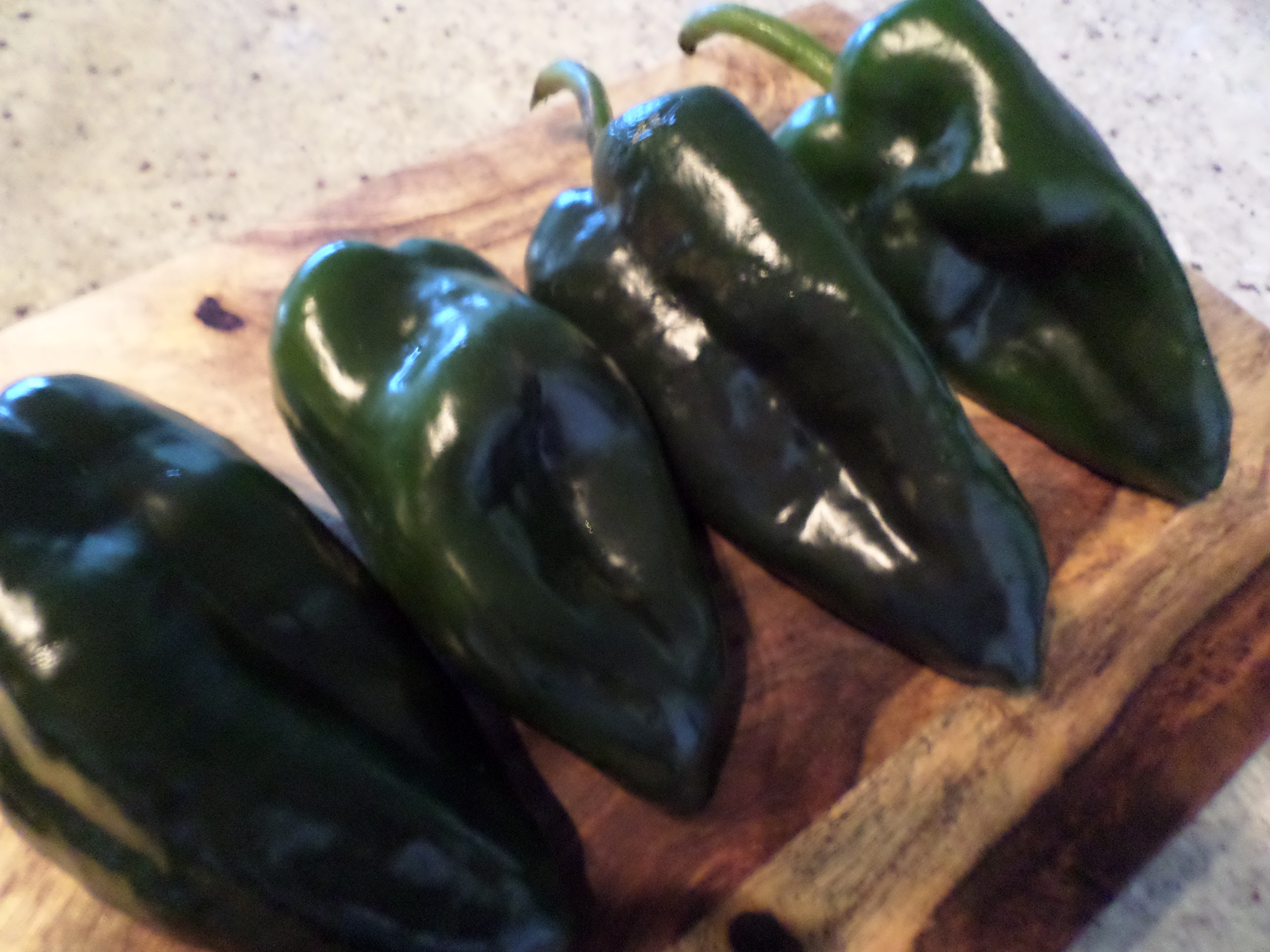
Lately, I imagine pablano chiles and chile rellenos. However, I do try not to eat fried foods. Chile rellenos are usually pablano (named after the city of Puebla) or pasilla chiles (or, in New Mexico, hatch chiles), stuffed with cheese, coated with an egg batter and a fine corn flour. Then they are deep-fried. These are most often served with a red sauce. So, I have been playing with pablanos and vegetable fillings and cheese and sauces.

Allow me to tell you about today’s stuffed chiles experiment. It was pretty tasty!

I started by creating filling of rice and vegetables:

½ a small bell pepper, diced

½ a small onion, diced

3 – 5 medium mushrooms, diced

1/3 cup of frozen corn

½ cup of cooked black beans

¾ cup cooked rice

½ tsp onion powder

½ tsp cumin

½ tsp salt

½ tsp pepper

1 tbsp tomato paste

2 tbsp olive oil

I heated my skillet. I put in the oil. I sautéed the onion, pepper and mushroom together for several minutes, until the onion turned clear, and then I added everything else. I let it all get warm and soft and married together.

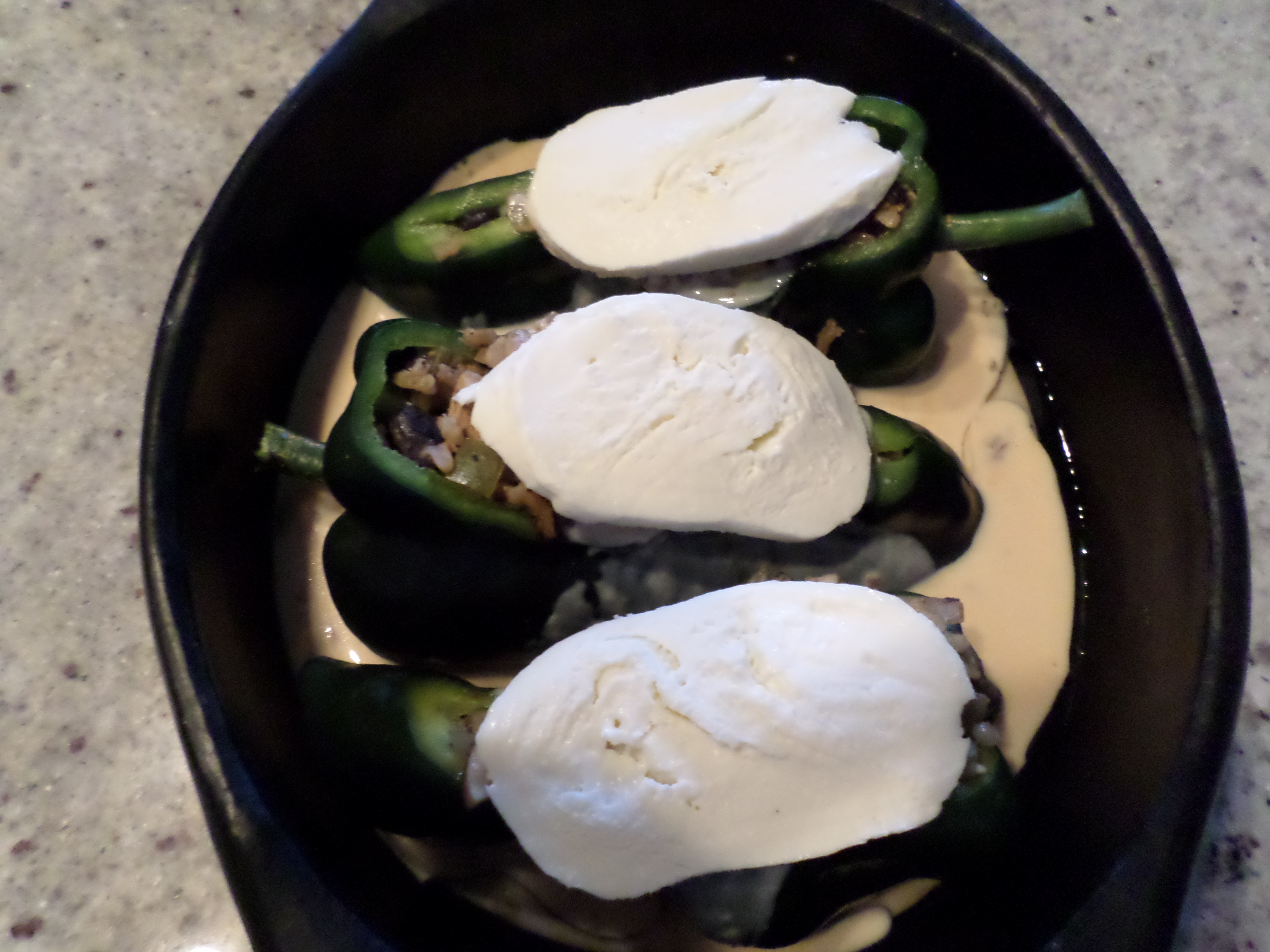
Then you will need 4 pablanos of roughly equal size. This is so that they will cook equally in the same amount of time. Cut open a slit, lengthways, into each one. Pull out the seeds, being careful not to break or tear the chile pepper. Stuff each one with the filling. Using a spatula may make this easier.

I made a chipotle and smoked cheddar cream sauce. I know. It’s a little rich, but it was truly delicious. You can omit the sauce, or use another, if you’d like. This was the sauce I made. I made a bechamel to start. Then I added spices, chipotle and a small amount of cheese. You will need:

2 tbsp butter or neutral oil

2 tablespoons of flour

1 3/4 cups milk or soy or nut milk

1 chipotle from canned (I tend to use 1 at a time, but there are several in a can and so, I freeze them and use them later.)

1 diced slice of smoked cheddar, or a vegan cheese like Daiya cheese, or not

1 tsp of oregano

½ tsp salt

½ tsp pepper

½ tsp onion powder

To make the béchamel, or white sauce, warm the oil in small pan on the stove top. Add the flour and combine these together. Let this mixture’s floury-ness cook a minute or two on medium heat. This is a white roux. Add the milk and everything but the cheese. Whisk this together and whisk it again every few minutes until it comes almost to a slow boil, but not quite! Just as it starts to bubble, turn the heat to low. It will begin to thicken. As it starts to thicken, stir in the cheese. Then, when the cheese is melted in, remove the dish from the heat. When you add shredded or grated cheese to a béchamel, it is then called a Mornay sauce, in French. But with the chipotle, I would not call it that at all. Maybe, chipotle crema?

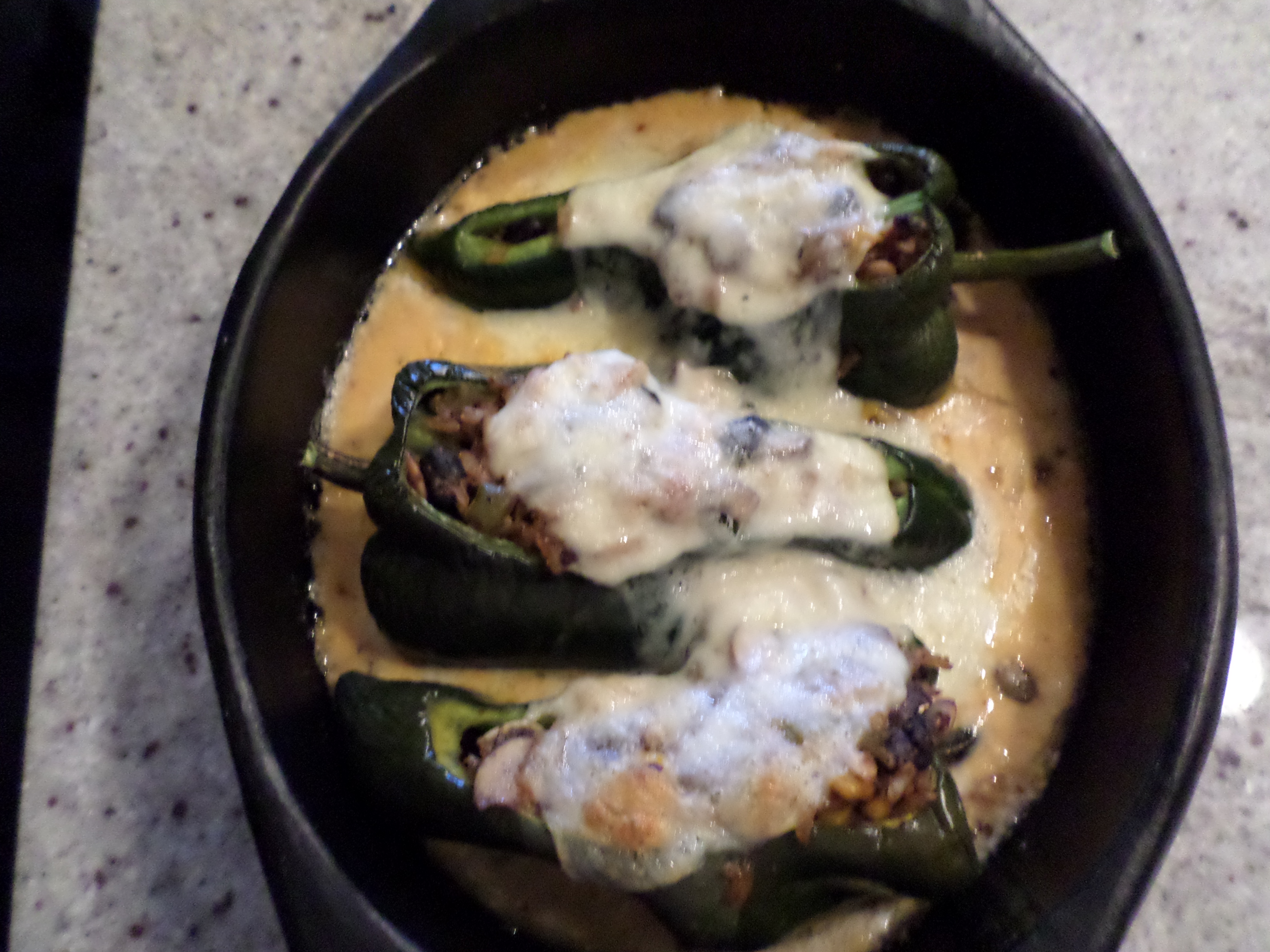
I lightly oiled my baking dish. I placed some of the sauce in the bottom of the dish. I placed my stuffed pablanos in the dish and I drizzled some sauce over them. I then lay a slice I cut of fresh cheese over each one. Note that if f you are not using sauce or cheese, you may want to put a small amount of water or vegetable stock in the bottom of your dish. I then put a foil tent over the top of the dish and I baked it in the oven at 375 degrees for 40 minutes.

When finished, my stuffed pepper was delicious with a small dollop of sour cream.
ImageImageImage

Coffee Reminds Me

Both of my grandmothers were German Americans. One, my maternal grandmother, was from Georgia, and the other, my paternal grandmother, was from New Orleans, Louisiana. Both had a love of coffee. Both served coffee to me as long as I can remember, perhaps as long as I could seat myself at the table. Coffee is an earliest memory for me.  It is an earliest ‘food memory’ for me. It is rich and something like bitter chocolate.  I confess I like it strong, and dark and toasty, almost burned, but not quite.  My mother’s mother put in a heaping spoon of sugar, filled the cup halfway with coffee and halfway with cream. It was the palest color and deeply sweet. Sometimes I drink coffee this way to remember. My father’s mother brewed coffee in an old enameled brew pot with chicory root on the stove top. I still have her coffee pot. Her coffee was dark and thick, but smooth, and served in little cups, demi-tasse cups, with a sludge on the bottom, like a Turkish coffee. It was served simply. She drank tiny cup after tiny cup, until it was a few pots per day. A coffee with chicory reminds me.

Vegan BBQ in Austin?!

You may be surprised to learn that Memorial Day is not, in fact, National BBQ Day. And, yet, many of us choose this day to honor our nation’s veterans and fallen heroes – and to cook outdoors.

Here in Austin, and in the greater central Texas region, there certainly is an abundance of BBQ every day. And you know we love our food trucks too!

My friend Julie and I set out to find vegan food trucks and, in particular, vegan BBQ.  Julie has been a happy and healthy vegan since we took a wild trip to India several years ago, and she got really sick! A clean vegan diet finally allowed her body to really recover.

We found a great vegan BBQ place! They opened last year and seem to be doing fine! BBQ Revolution, whose slogan is “All the Grillin,’ None of the Killin,’ is located at 701 53rd St., in a pod with other mostly vegan food trucks. So, we decided to go over and check them out.

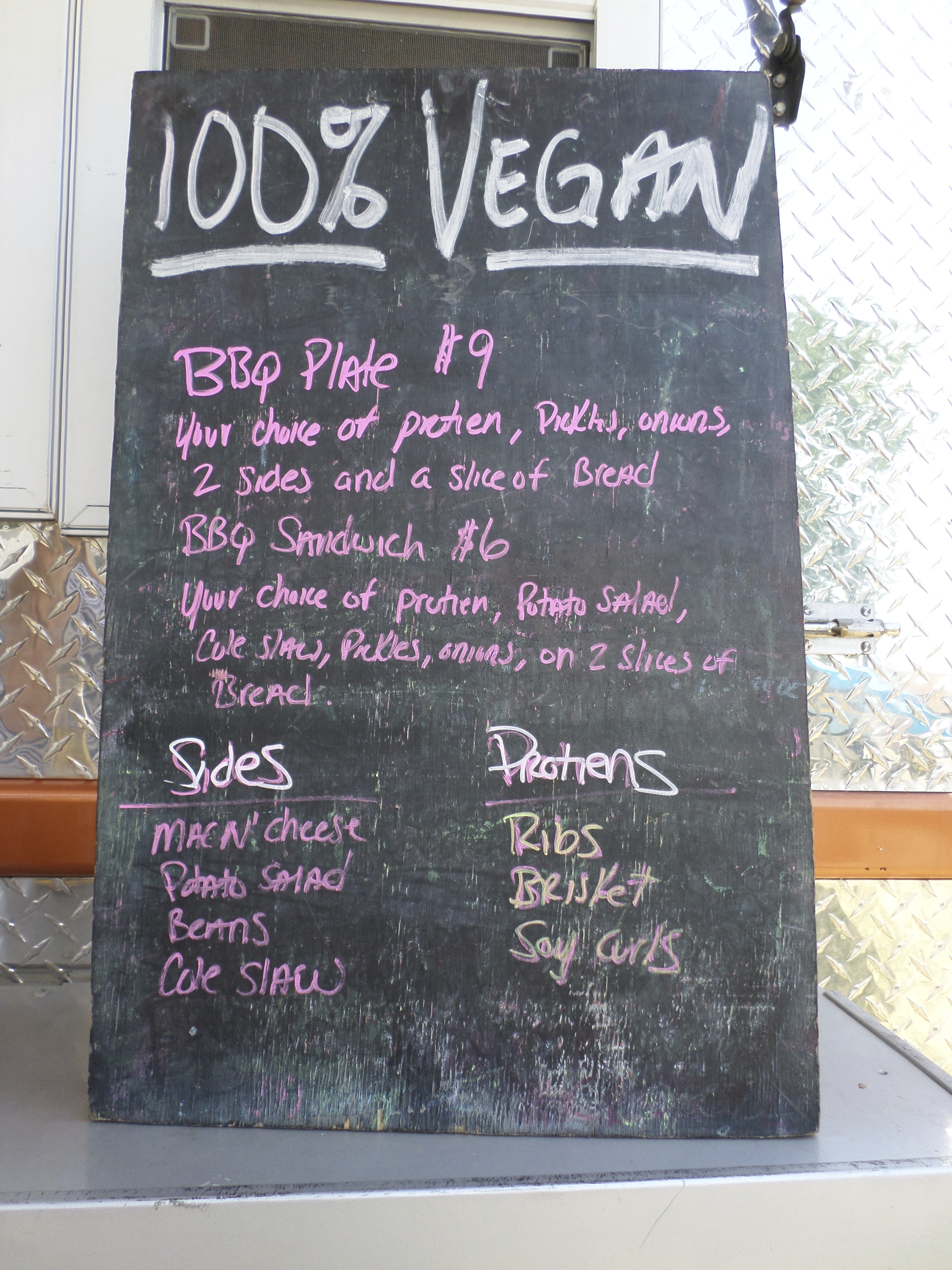
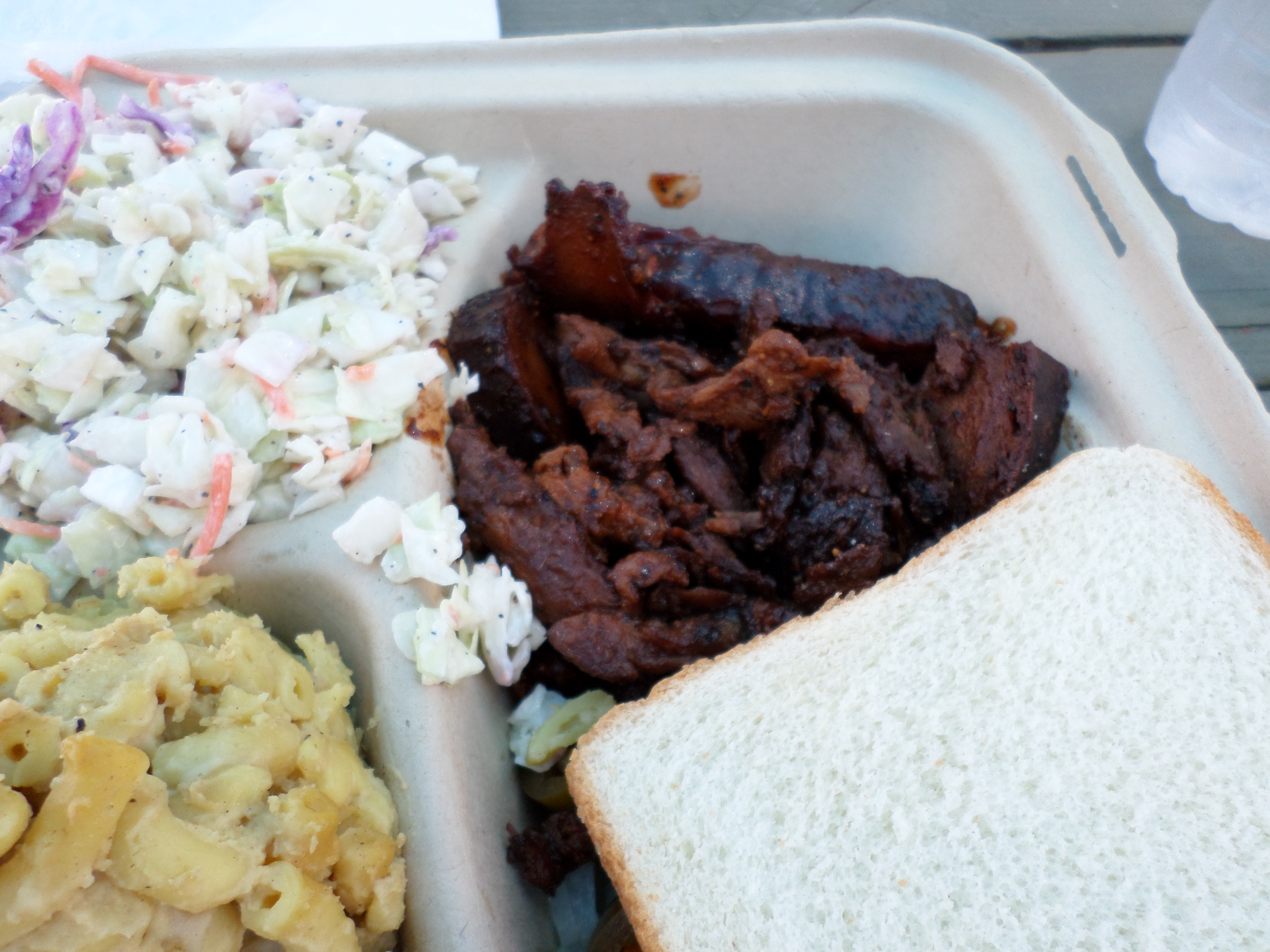
They have a classic menu. A plate is $9 and a sandwich is $6. You can get vegan ribs, brisket or soy curls. We asked to sample each and they kindly agreed. These guys are really nice guys. They use local ingredients. Everything had a great smoky flavor and is smoked on site. We had a choice of 2 sides. We tried the mac and the coleslaw. It was nice to have a slaw that was not smothered in mayonnaise. They also have beans and potato salad available. And, as is typical here, the BBQ is served with a slice of dry white bread. I felt right at home.

Image

I don’t eat smoked foods often these days, but for those who on occasions, such as Memorial Day, miss traditional foods made with meats, this is a terrific no meat treat. Go check them out! And, hurry, because they do sell out!

Image

Tamale Tradition

When I started my blog, I wrote about Tres Hermanas, the Three Sisters, and the early origins of New World food. I find myself deeply interested in the origins of food in general and of New World foods in particular. How can I connect my own earliest food memories with the food I know today? And can I connect my own history to earlier American people and traditions?

My mother’s parents were restaurant people.  When my mom was a girl, my grandparents had a hamburger stand on the side of the road, Mr. B’s Burgers.  My mom met my dad, who was bagging groceries at the grocery store, when she would shop for staples for their roadside business.  When I was a girl, my grandparents had a Mexican restaurant.  My grandfather had developed a passion for Mexican food.  And as they neared retirement, they became restaurant inspectors for a chain of Mexican restaurants.  I remember hot summers driving across Texas in my grandfather’s station wagon, for his job, stopping at various Mexican chain restaurants along the way. 

This is a small part of how I learned about Mexican food. We ate rice and beans, enchiladas, tamales, chile rellenos, sopaipillas, flautas, queso… At home he grew chilies and tomatoes in coffee cans. Spring onions were served raw with such meals and set on the table in canning jars… These things contribute to my own earliest food memories.

Early North Americans began to make dough from corn using a process called nixtamalization. It means that the corn kernels were soaked in water and lime (the mineral, not the citrus fruit) until the coarse outer skin of the corn kernel loosened from the soft meal of the corn within. Through this process of nixtamalization, the niacin within the corn becomes accessible to the consumer. The corn could then be cooked and eaten, or re-dried as hominy, or it could be ground into a masa or dough. This dough, for examples, would be used for tamales and tortillas.

Though this was the process for hundreds of years, I certainly don’t know anyone who does this at home today. If you’re down to try, I’d seriously like to come over and check you out…

Today, one buys a big bag of masa harina at the market and hopes to be lucky enough just to find non-GMO, if not organic. How do we take this dry corn meal – and make a lovely dough comparable to the healthy, native nixtamalized corn masa?

The primary ingredients for tamales today are the masa harina and a solid fat – traditionally, lard. Vegetarian and vegan versions of this Native American food are typically made with shortening. For many of us who are trying to eat mindfully, these fats, and hence, tamales too, may be off the menu.

For me this was rather heart breaking. This is a food I grew up with, an incredible comfort food. But, in truth, I had no hope of any healthy alternative. I didn’t even look. I tried to write off the tamale. I felt that without a considerable amount of solid fat, the steamed tamale would never have the desired light, fluffy consistency.

Then someone sent me the Mayo Clinic’s tamale recipe. Seriously. Mayo Clinic. “Mayo Clinic” and “tamale” felt like a ridiculous and cruel non sequitur to me. Everything about it smelled like mothballs and disappointment, I imagined… I felt sort of geriatric and somehow insulted. I had no hope that this could be anything other than a heavy failure. I still don’t know why I even tried it.

Ignore for now the filling they suggest – there are infinite possibilities for us with the right masa! And this masa does work!

What made this masa work was the inclusion of thawed frozen corn kernels processed in a food processor with the masa harina. This, with the addition of some water (or broth), only 3 tablespoons of oil (comparatively little! They recommend canola, which I dislike. Try safflower oil.), and a lifting agent, a teaspoon of baking powder – made for a dough with a fluffy and light body of soft corn meal. I was truly impressed.

To anyone who suggests that this recipe might be ‘less authentic’ when compared to other contemporary variations of tamales, I am going to suggest that the opposite may be true. Because the corn is blanched, frozen, thawed and processed in the food processor, the kernel of the corn is broken down and less fat is required. This may be more authentic, as the earliest versions of this dough had no added fat.

Please try them. Fill them with roasted vegetables or beans or chilies and cheese… or all of these. Tamales freeze and re-steam so nicely. I believe they present a healthy alternative with all the comfort, flavor and body of the native food.

Escabeche De Cebolla/Mexican Pickled Red Onions

I love Mexico, I love Mexican food, and especially, I love the Yucatan.

Merida, the humble capital of the Yucatan, is one of my favorite cities. I love the nearby access to the pyramids and the Native American history and culture. I love the colonial Spanish architecture of the Merida Centro, the diversity of the population, the freshness of the food… I love the Yucatan’s nearly white beaches and the azure water. Some will love the access to so much fresh seafood.

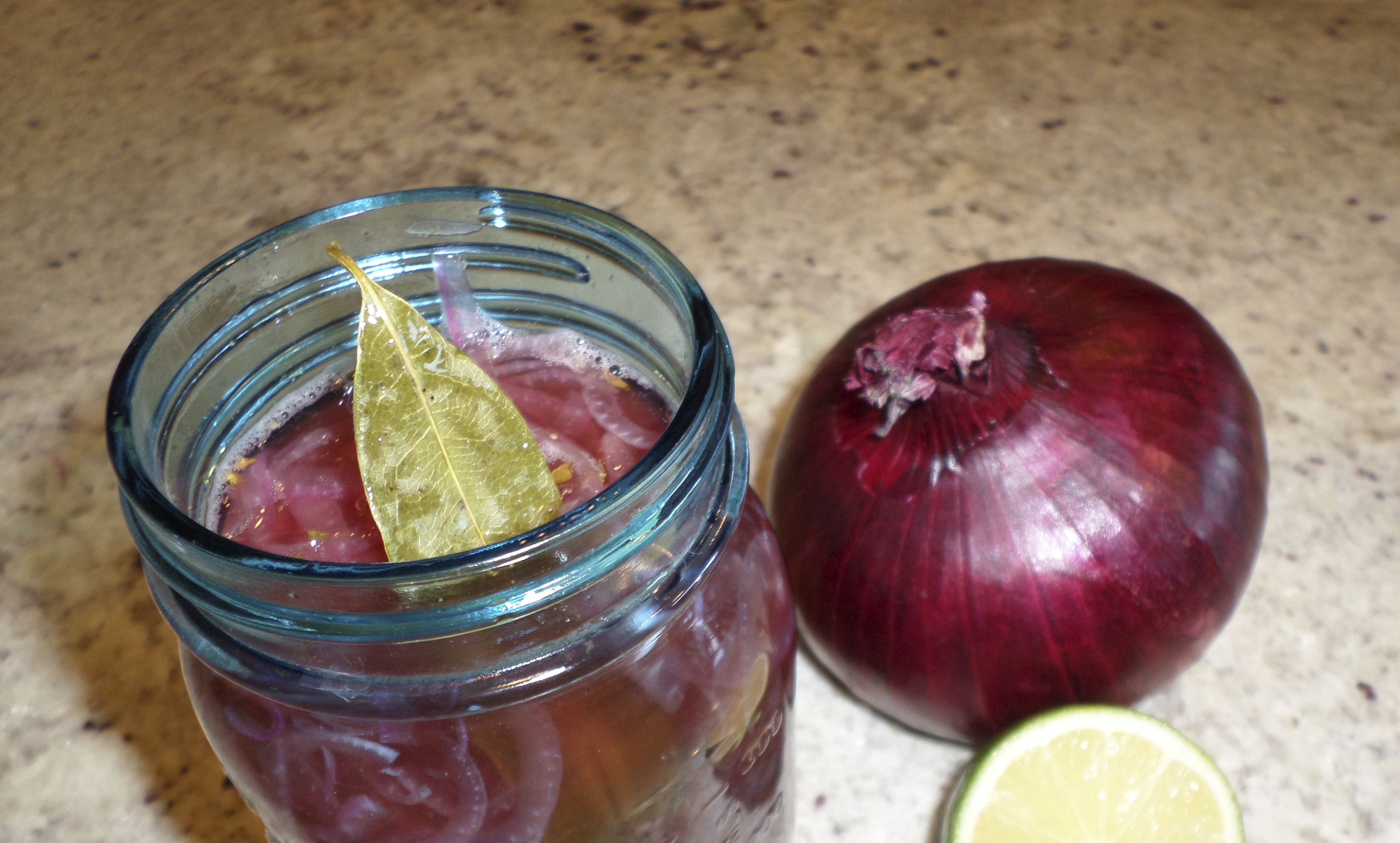
When I put Mexican food on my table, I almost always have a bowl of Mexican pickled red onions. This condiment, a sort of pickle relish, comes from the Yucatan (and has been traditionally paired with seafood, often fish tacos).

I adore both its brilliant pink color and its bright flavor. I have seen, and made, many variations: Sometimes the onions are blanched, sometimes they are added raw, sometimes the flavor is quite clean and sometimes spices, like earthy cumin may be added… This is the way I have tended toward making the onions of late.

I suggest that you make this a few days ahead, so that the flavors have time to combine – and the onion sort of pickles and crisps.

You will need:

¾ cup boiling water

½ teaspoon salt

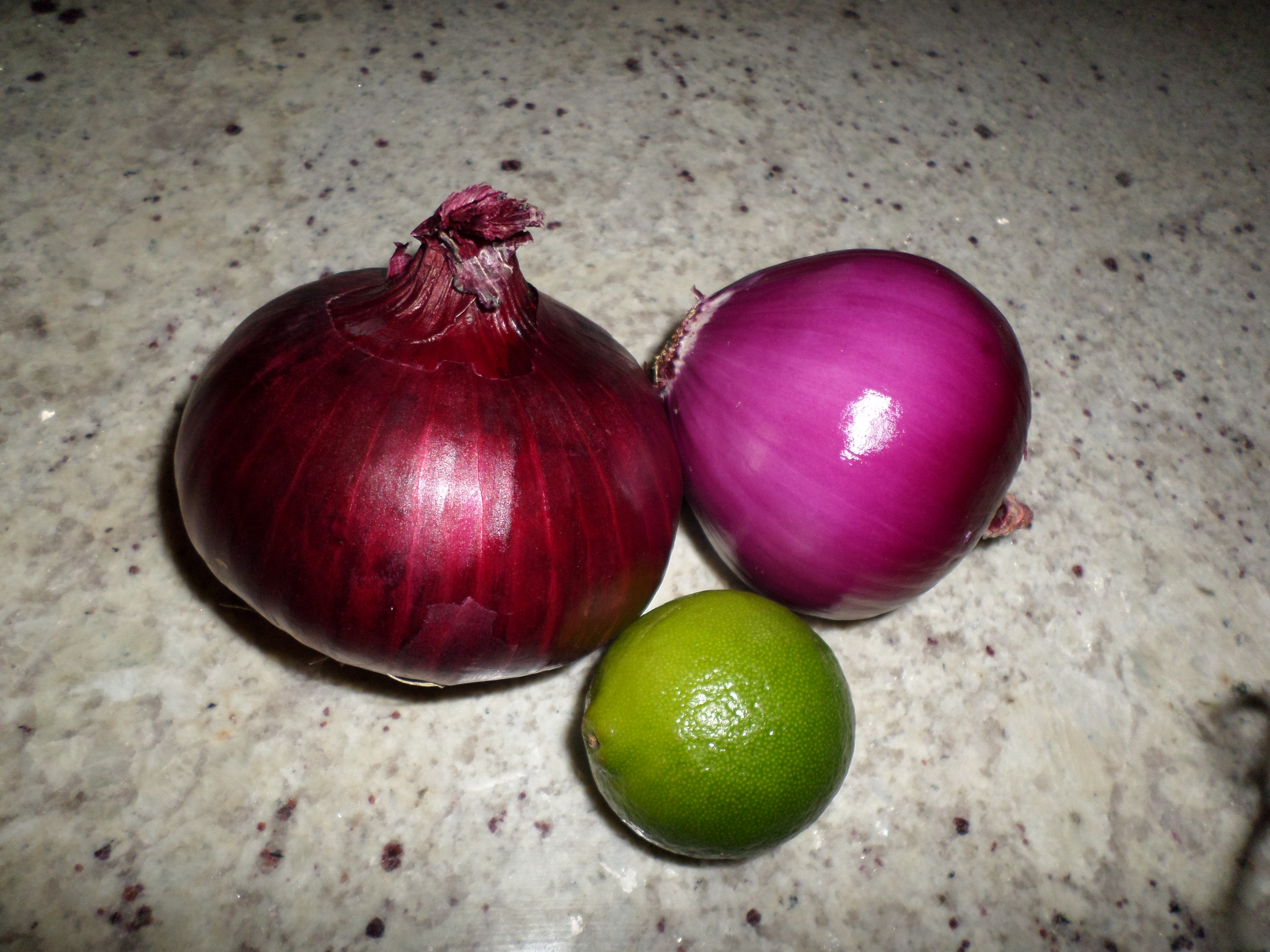
1 medium red onion

10 black peppercorns

1 bay leaf

½ teaspoon oregano

½ teaspoon cumin

½ teaspoon sugar

1 and ¼ cup red wine vinegar

½ small lime, juiced

A small – medium glass jar with a lid, e.g. holds about 2 cups or so of liquid

A mandolin slicer is highly desirable (and I suggest you either buy a cut-resistant glove, or just put the band-aids on before you get the slicer out of the box).

A fine mesh colander

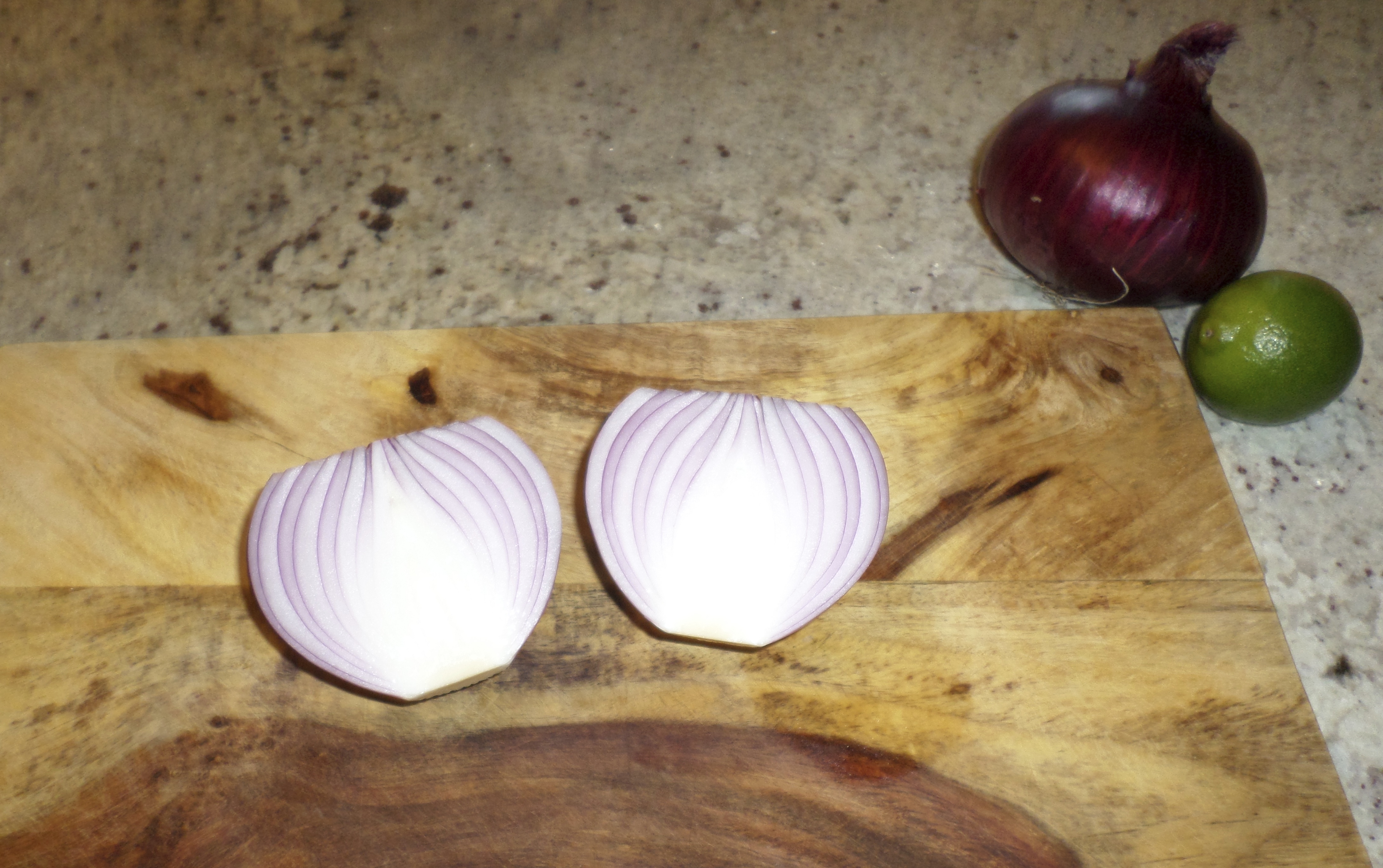
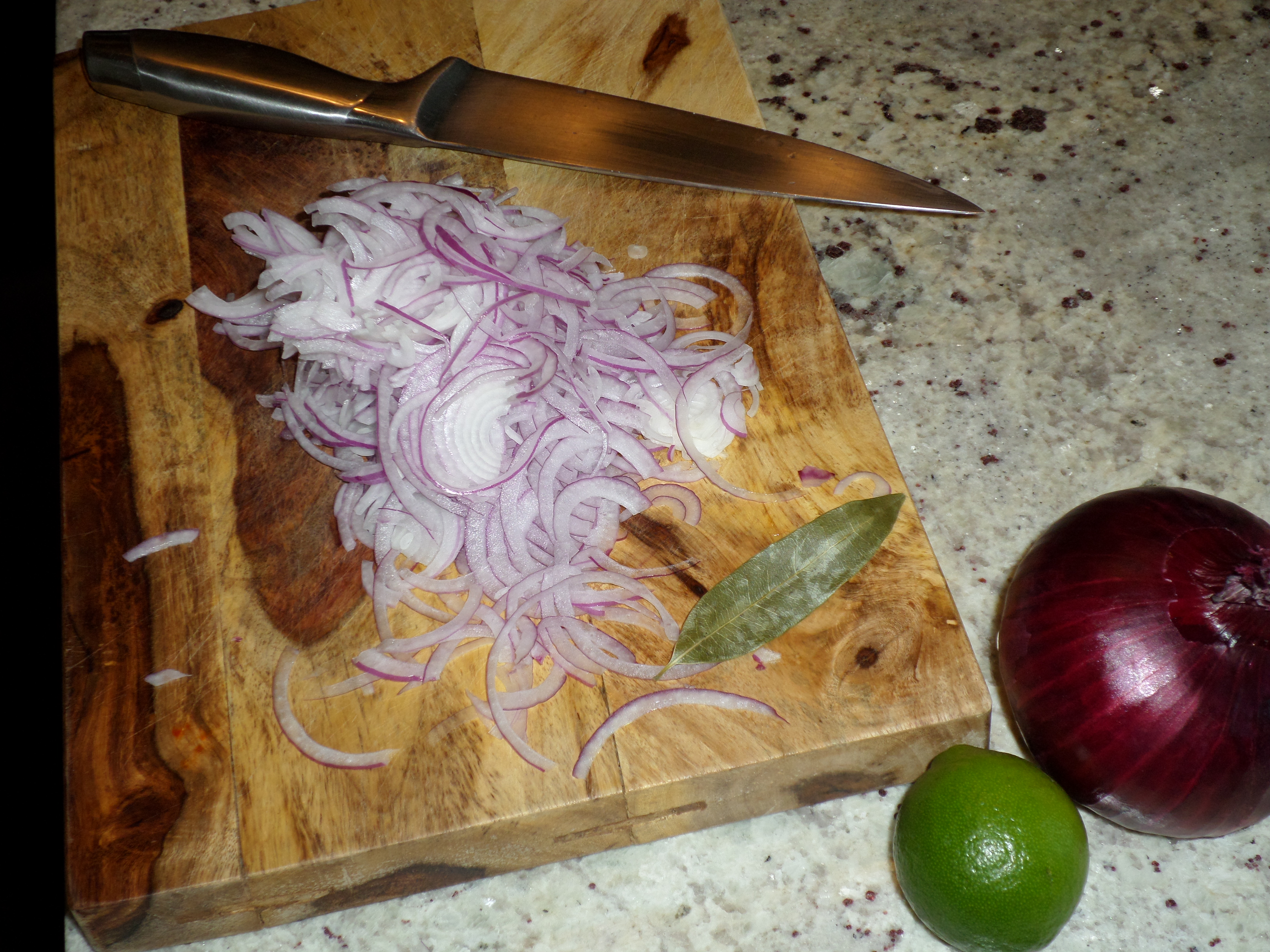
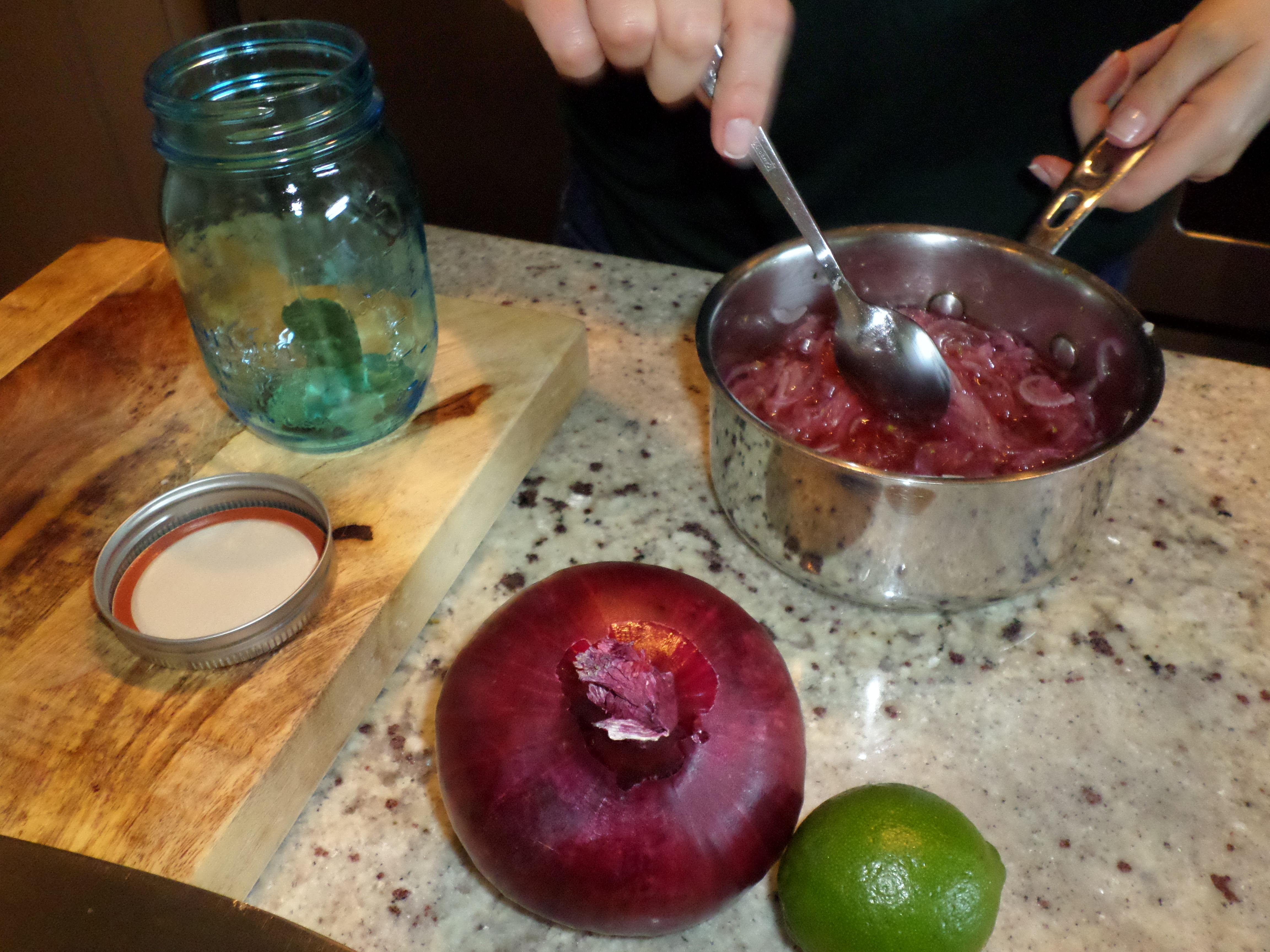
First, cut the top off of your onion. Trim the root so that you have removed the root fibers without cutting far into the flesh of the onion. Then, cut your onion in half from pole-to-pole/top to root. Lay the half rounds so that the flat surface is down and either run the flat top against the mandoline’s blade or make thin, horizontal slices with your knife. In a small pan, boil the water and add the salt. When the water comes to a boil add in the onion slices and stir to just coat the onion with the boiling water. You are not cooking the onion. You are just barely blanching it. Drain the onion using a fine mesh colander.

In the glass jar combine, the onion, the peppercorns, the bay leaf, the oregano and cumin, the sugar, and then, pour the vinegar over the top of these. Squeeze in ½ a lime.   The jar should be nearly full. If it is not quite full, it is ok to add a little water. Put on the lid and shake everything up to combine well. Take the lid back off of the jar and allow the mixture to cool thoroughly for an hour or so. Then, put on the lid, give it another good shake, and place it in the refrigerator. Leave it over night. You can serve these as soon as the next day. I think it is best a few days later. The onion will lose its sharpness and the flavors will develop over a few days.

Serve these onions with any tacos. I sometimes even put this on my vegetable enchiladas. I also regularly serve these on salads. I absolutely love these with cooked greens!

SAMSUNG CAMERA PICTURES SAMSUNG CAMERA PICTURES SAMSUNG CAMERA PICTURES SAMSUNG CAMERA PICTURES SAMSUNG CAMERA PICTURES

The Humble Black-eyed Pea Salad

As much as I love to eat my vegetables, and really all vegetables, I am not a fan of iceberg lettuce salads, nor even, any mostly lettuce salads. I like big, hearty salads, kale salads, roasted vegetable salads…
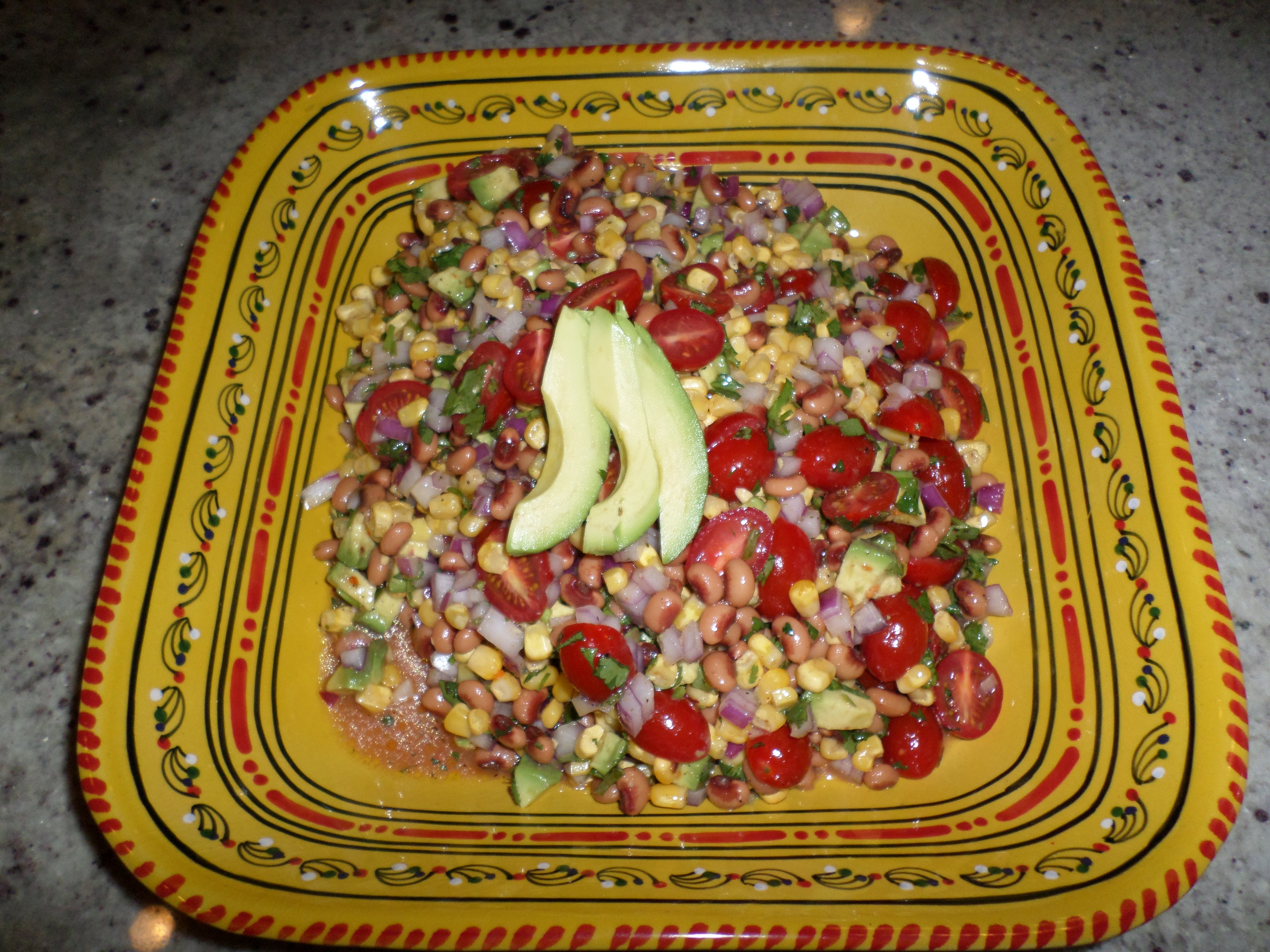
My mom’s favorite salad is a black-eyed pea salad. I love this salad too, for its heartiness, for its flavors and for the healthy fat in its avocado. My parents are at my house, visiting, and my mom wanted to make a dish to take to her church this weekend for their potluck. I think this one is a great choice when one needs to bring a dish to a potluck or party.
She and I each make this salad a little differently than the other. Today, we made her classic style – and below, I suggest variations that I tend toward.

The salad itself – and nothing need be exact about any of this – includes:
2 cups of fresh or thawed from frozen corn kernels
2 cups black-eyed peas or 1 can, rinsed (I use dried, cooked the day before and rinsed, but my mom prefers canned and rinsed) (I also sometimes use 1 cup of rinsed black-eyed peas and 1 cup rinsed black beans)
1 pint of cherry or grape tomatoes, halved
½ medium – large red onion, diced
1 medium – large avocado, cubed
1/3 – ½ cup chopped fresh cilantro
Optional: I also like halved or quartered green, pitted olives, maybe 1/3 – ½ cup. I also add a diced bell pepper. If you like heat, you could add a thinly sliced jalapeño.

The dressing includes:
2 tbsp. olive oil
¼ cup red wine vinegar
½ tsp. salt
½ tsp. pepper
¼ teaspoon each of garlic powder, cumin, oregano
Add several good dashes of hot sauce

Once the vegetables are chopped, the hardest part is over. This is so easy. Combine all of your vegetables in a large bowl. Combine all of your dressing ingredients in a small bowl and whisk them together. Pour the combined dressing over the vegetables and gently combine. You can serve this immediately. I prefer to let it marinate together overnight. This will serve ~6.

Truly, it is a humble, but healthy and flavorful dish.

SAMSUNG CAMERA PICTURES

Tres Hermanas: Corn, Beans and Squash

When I imagined starting an Austin, Texas based, vegetarian, Tex-Mex culinary blog, I made a long list of topics that I wanted to talk about. I have a long list of favorite foods to cook that need to be converted to proper recipes and I am already enjoying the process of recipe testing. But of all the potential topics, it was hard to imagine the best starting place. What would make a meaningful first blog post, something future posts could begin to build on?

I knew what I did not want to do. I knew I did not want some boring post about how to get your protein. I began to imagine something about pantry staples for this regional cookery… And then, I imagined something even more fundamental, which ironically, took me back to how to get your protein.

In cooking, we sometimes refer to Old World foods (crops) and New World foods (crops). We mean where the food originated and evolved, prior to the colonization of the Americas by the Europeans.

Part of my personal philosophy about eating is that people and whole native foods evolved together and that one should eat whole foods, known to our bodies – and certainly, eat nothing created after World War II!

The Europeans brought to the Americas apples, apricots, citrus, various melons and cruciferous vegetables, not to mention the Old World spices, black pepper, cinnamon and cardamom. And the New World gave us the avocado, the potato, tomato, chocolate, corn, many of our beans – and wild rice (as opposed to Asian rice).

This brings me to area I truly want to talk about: Tres Hermanas, The Three Sisters. The Three Sisters are corn, beans and squash, native plants to the Americas, which were traditionally planted together. The beans, climbing beans, were planted as companion plants to the corn. They grew together and the beans would climb the corn stalk as the season progressed to harvest. The squash provided ground cover. For the next season, the beans gave nitrogen to the ground and the squash, mulch.

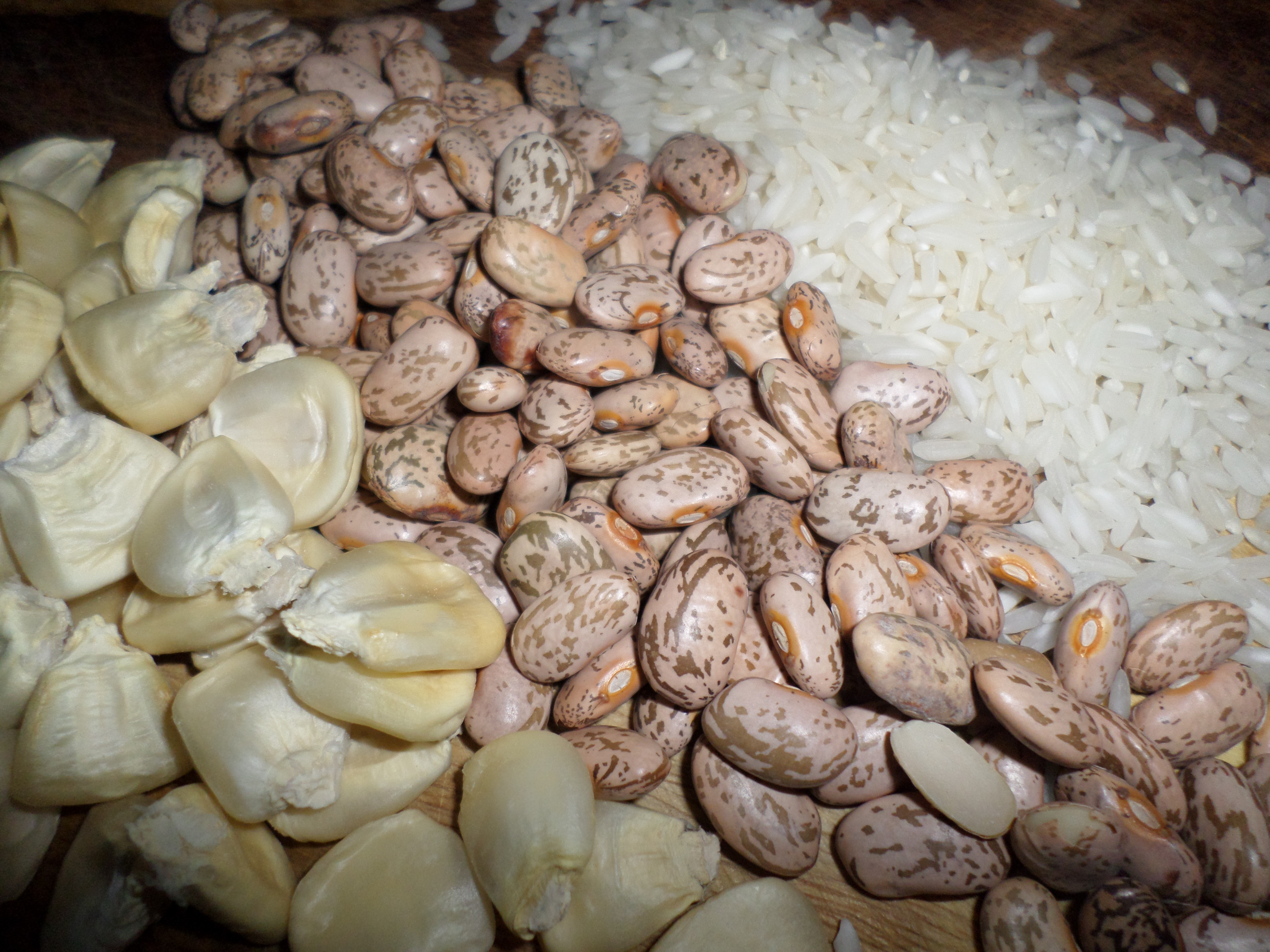
Everybody knows that rice and beans, eaten together, are a complete protein. And in this context, we do mean the Asian rice which came to the Americas. But to the native Americans, corn and beans, together, were a complete food. The native corn lacks Lysine and Tryptophan – which the body needs to create its protein – but the bean has both. And, so, what grows together, goes together. This is the foundation of American cookery.

Hold this consideration, as we go forward together into vegetarian Tex-Mex cooking.

– The Vegetexican
SAMSUNG CAMERA PICTURES